
The short answer is yes. The more useful answer explains why, and what the cost of proceeding without one typically looks like.
Commercial real estate transactions in Ontario are initiated by an agreement of purchase and sale. That document, once signed by both parties, is a binding contract. It defines what is being transferred, on what terms, and at what price. It allocates risk between buyer and seller. It determines what happens if a condition is not satisfied, if the property is damaged before closing, if representations turn out to be false, or if either party fails to complete. It governs the transaction from the moment of acceptance to the moment of closing, and in many cases well beyond.
Despite this, commercial purchase agreements are sometimes negotiated and signed without legal review, or with legal input limited to a cursory read of a standard form. The assumption is that the document is routine, that the standard Ontario Real Estate Association (OREA) commercial form covers everything that matters, or that lawyers can be brought in later if something goes wrong.
Each of these assumptions deserves examination. What follows is a plain account of what a commercial purchase agreement actually contains, where the legal risk concentrates, and what happens when those risks are not addressed properly before the document is signed.

What a Commercial Purchase Agreement Actually Is
A residential Agreement of Purchase and Sale in Ontario is a relatively standardized document. The OREA residential form is widely used, understood by practitioners, and interpreted by a well-developed body of case law. A buyer and seller using the standard residential form, with appropriate schedule amendments, can proceed with reasonable confidence that the fundamental structure of the agreement is sound.
A commercial purchase agreement is a materially different instrument. Commercial transactions vary enormously in their subject matter, structure, and risk profile. The acquisition of a retail plaza, a medical office building, an industrial property, a development site, and a commercial condominium unit each involve different legal, regulatory, and financial considerations that a standard form cannot adequately address. The OREA commercial form provides a starting point, but it is precisely that: a starting point. The provisions that determine the actual legal relationship between buyer and seller are negotiated and drafted through schedules, amendments, and supplementary terms that the standard form leaves entirely blank.
A commercial purchase agreement that has been properly drafted by experienced legal counsel is a comprehensive document. It defines the property with precision, specifies the purchase price and payment mechanics, sets out the condition period and the consequences of a condition not being satisfied, allocates responsibility for the property between signing and closing, addresses the treatment of existing tenancies and leases, specifies what representations and warranties the seller is making about the state of the property and the accuracy of disclosed information, and sets out the remedies available to each party in the event of a breach.
Each of these elements is a potential source of dispute if it is absent, ambiguous, or drafted in a way that does not reflect what the parties actually agreed.
Where the Risk Concentrates
Commercial purchase agreements are not uniformly risky. Some provisions are largely administrative. Others are where significant financial exposure concentrates. The following are the categories that warrant the closest legal attention.
The Condition Clause
Conditions in a commercial purchase agreement give one or both parties the right to rescind the agreement if specified circumstances do not materialize. The most common conditions relate to financing, due diligence, and in some cases rezoning or regulatory approval. How a condition is drafted determines whether it actually provides the protection a party believes it does.
A condition that is not drafted with sufficient specificity can be interpreted as having been satisfied when the buyer subjectively believes it has not been, or as having been waived when the buyer intended to rescind. Ontario courts have considered numerous disputes arising from ambiguous or improperly drafted condition clauses. The lesson from that body of case law is consistent: conditions must specify the triggering event with precision, the standard against which satisfaction is measured, the party entitled to waive the condition, and the consequences of non-satisfaction. A condition that does not address these elements is a condition that may not work when it is needed.
Risk of Loss Between Signing and Closing
The standard OREA commercial form addresses the allocation of risk between signing and closing, but in terms that may not reflect the commercial realities of a specific transaction. If the property is damaged between the date of signing and the date of closing, who bears that risk? What are the buyer’s options if damage is material? Is the seller required to maintain insurance in a specified amount during that period?
For a small commercial property with limited replacement value, the standard provisions may be adequate. For a transaction involving a substantial building or a property where the physical condition is integral to the purchase price, those provisions warrant careful review and, where necessary, amendment. A buyer who closes on a property that was damaged before closing and finds that the risk allocation in the agreement is unfavourable has limited recourse after the fact.
Representations and Warranties
A seller’s representations and warranties in a commercial purchase agreement are statements of fact that the seller is making about the property, the state of the title, the existing tenancies, the compliance of the property with applicable laws, and the accuracy of any financial information provided to the buyer. If a representation turns out to be false, the buyer may have a claim for damages or, in serious cases, grounds to rescind the agreement.
The scope, specificity, and survival of representations and warranties are heavily negotiated in commercial transactions. Sellers seek to limit representations to matters within their actual knowledge, to exclude representations about matters the buyer could have discovered through due diligence, and to limit the period during which claims can be brought after closing. Buyers seek comprehensive, unqualified representations that survive closing for a meaningful period.
A commercial purchase agreement that contains no representations and warranties, or representations that are so heavily qualified as to be practically meaningless, leaves the buyer without legal recourse for material inaccuracies in the information on which the purchase price was based. The appropriate scope of representations and warranties depends on the nature of the property, the quality and completeness of information provided by the seller, and the extent to which due diligence has independently verified that information.
The Treatment of Existing Leases
Where the property being acquired is income-producing, the existing leases are among the most commercially significant elements of the transaction. The purchase agreement must address how those leases are treated on closing: whether they are assigned to the buyer, whether the seller provides representations about their status and enforceability, what happens if a lease is terminated or a tenant defaults between signing and closing, and what the buyer’s remedies are if the disclosed lease information turns out to be inaccurate.
A buyer who acquires a commercial property and subsequently discovers that a major tenant was in default at the time of closing, or that a lease contains terms materially different from those disclosed by the seller, may have a claim under the purchase agreement, but only if the agreement contained adequate representations and protections addressing those specific issues. Standard form documents typically do not.
Closing Conditions and Pre-Closing Obligations
Most commercial transactions require both parties to take specific steps between signing and closing: the seller must maintain the property, keep insurance in force, continue to operate any business on the property in the ordinary course, obtain required consents, and deliver specified documents at closing. The buyer must advance its due diligence, arrange financing, and satisfy any conditions precedent to its own closing obligations.
A purchase agreement that does not specify these pre-closing obligations with sufficient precision is an agreement where disputes about whether they have been met are difficult to resolve and expensive to litigate. What does it mean to operate in the ordinary course? What capital expenditures require the buyer’s prior approval? What happens if a required consent is refused? These are questions that should be answered in the agreement, not left to interpretation after a problem has arisen.
Default and Remedies
What happens if one party fails to close? The answer depends entirely on what the purchase agreement says. If the buyer defaults, is the seller entitled to retain the deposit as liquidated damages, or can it also claim its actual losses? If the seller defaults, is the buyer limited to the return of its deposit and its transaction costs, or can it seek specific performance compelling the seller to complete the transaction?
In Ontario, specific performance of a real estate contract is an equitable remedy available where damages would be an inadequate substitute for the specific property being acquired. However, its availability is not automatic, and a buyer who wants to preserve the right to seek specific performance needs to be prepared to demonstrate that the property is unique and that it is ready, willing, and able to close. A well-drafted agreement supports that position. A poorly drafted one may undermine it.
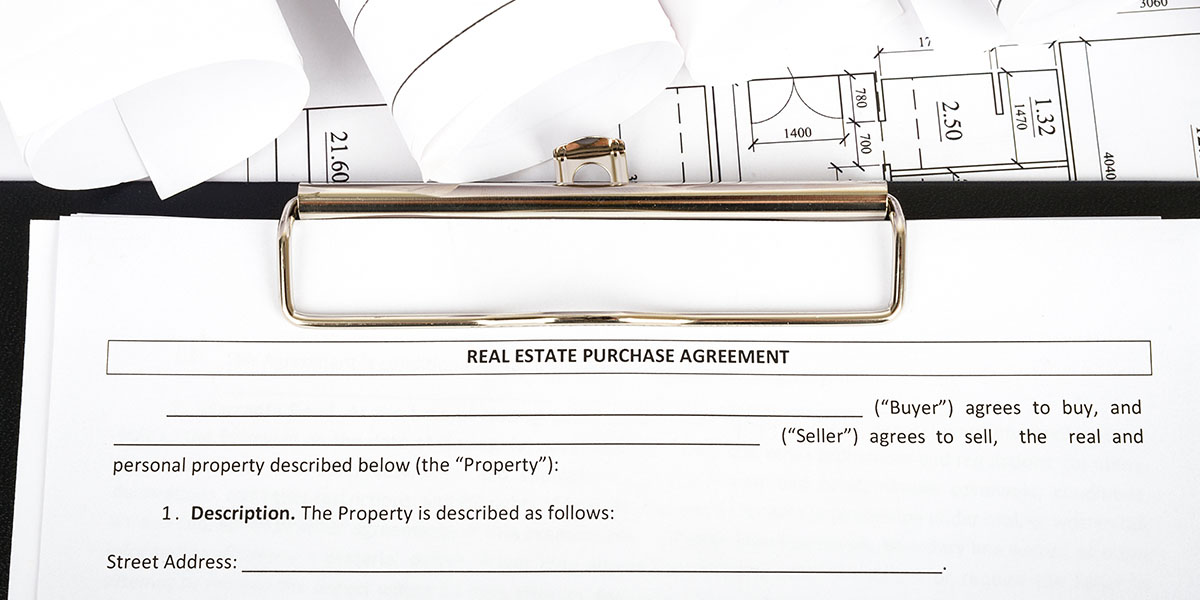
The Standard Form Is a Starting Point, Not a Complete Agreement
The OREA commercial form is a useful document. It provides a recognized structure that parties and their advisors understand, and it addresses a number of fundamental transaction elements in a way that is broadly accepted in the Ontario market. Its use as a starting point is entirely reasonable.
Its limitations are also well understood by practitioners. The OREA commercial form does not address environmental representations. It does not contain comprehensive tenant and lease representations for income-producing properties. It does not address the treatment of service contracts, equipment leases, or operational agreements that may affect the property. It does not specify the allocation of transaction costs in the detail that sophisticated buyers and sellers typically require. And its condition clauses, as drafted, are often less specific than the parties’ actual intentions require.
These gaps are filled through scheduled amendments and supplementary terms negotiated by the parties and their lawyers. A buyer relying on the standard form without supplementary negotiation is relying on a document whose gaps may be filled by the common law in ways that do not reflect the buyer’s expectations or protect the buyer’s interests.
Legal Counsel as Risk Management
The framing of legal fees as an overhead cost in a commercial real estate transaction reflects a misunderstanding of what legal counsel actually does in the context of a purchase agreement. The function of experienced commercial real estate legal counsel is not document production. It is risk identification, risk allocation, and risk mitigation.
A lawyer reviewing and drafting a commercial purchase agreement is assessing each provision against the specific facts of the transaction, identifying where the agreement is silent or ambiguous on matters that could become material, negotiating terms that allocate risk in a manner consistent with the buyer’s commercial objectives and risk tolerance, and ensuring that the agreed terms are accurately captured in language that will be interpreted consistently with the parties’ intentions.
The cost of that counsel is predictable and finite. The cost of proceeding without it is neither. A post-closing dispute over a misrepresentation, an ambiguous condition clause, a default by a major tenant, or a defect in title that was not adequately addressed in the agreement can consume multiples of the legal fees that would have been incurred at the front end, and in some cases results in outcomes that no amount of subsequent legal effort can correct.
Commercial real estate transactions are material financial events. The legal documentation that governs them deserves the same rigour as the financial analysis that supports the purchase price.
Acquiring Commercial Property in Ontario? Speak With Our Team.
At Goldstein & Grubner LLP, our commercial real estate lawyers draft, review, and negotiate commercial purchase agreements for buyers and sellers across Ontario. We act on transactions involving retail properties, office buildings, industrial assets, multi-tenant developments, medical office buildings, and commercial land, bringing the same standard of legal rigour to every file.
Contact our office to discuss your transaction.
This article is intended for informational purposes only and does not constitute legal advice. The appropriate scope of due diligence varies with each transaction. For advice specific to your acquisition, please consult a qualified commercial real estate lawyer.
